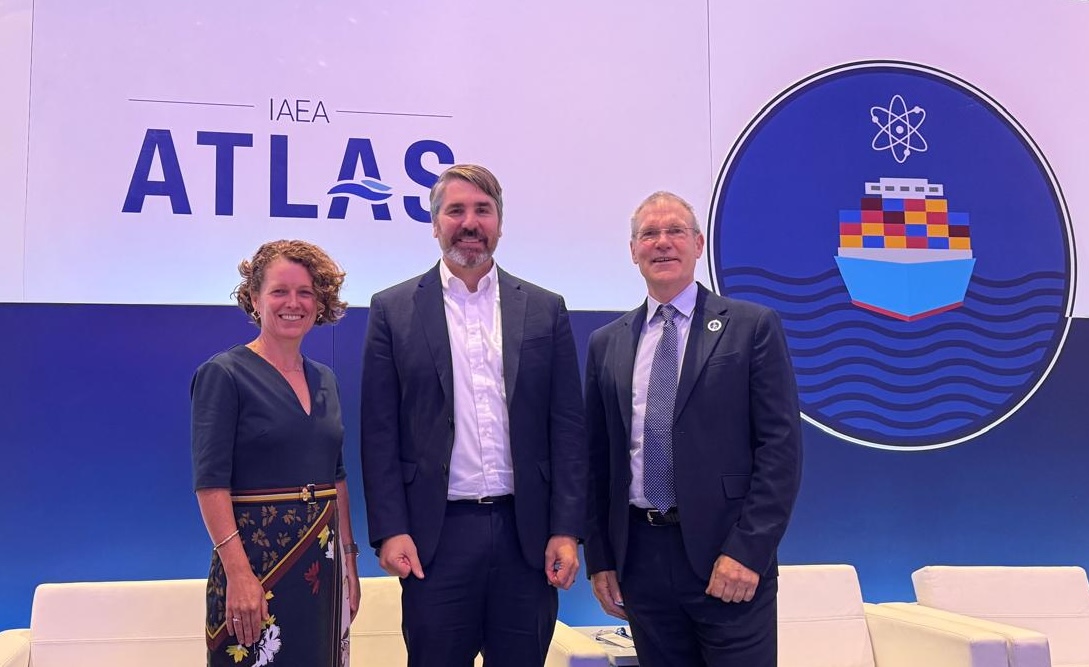
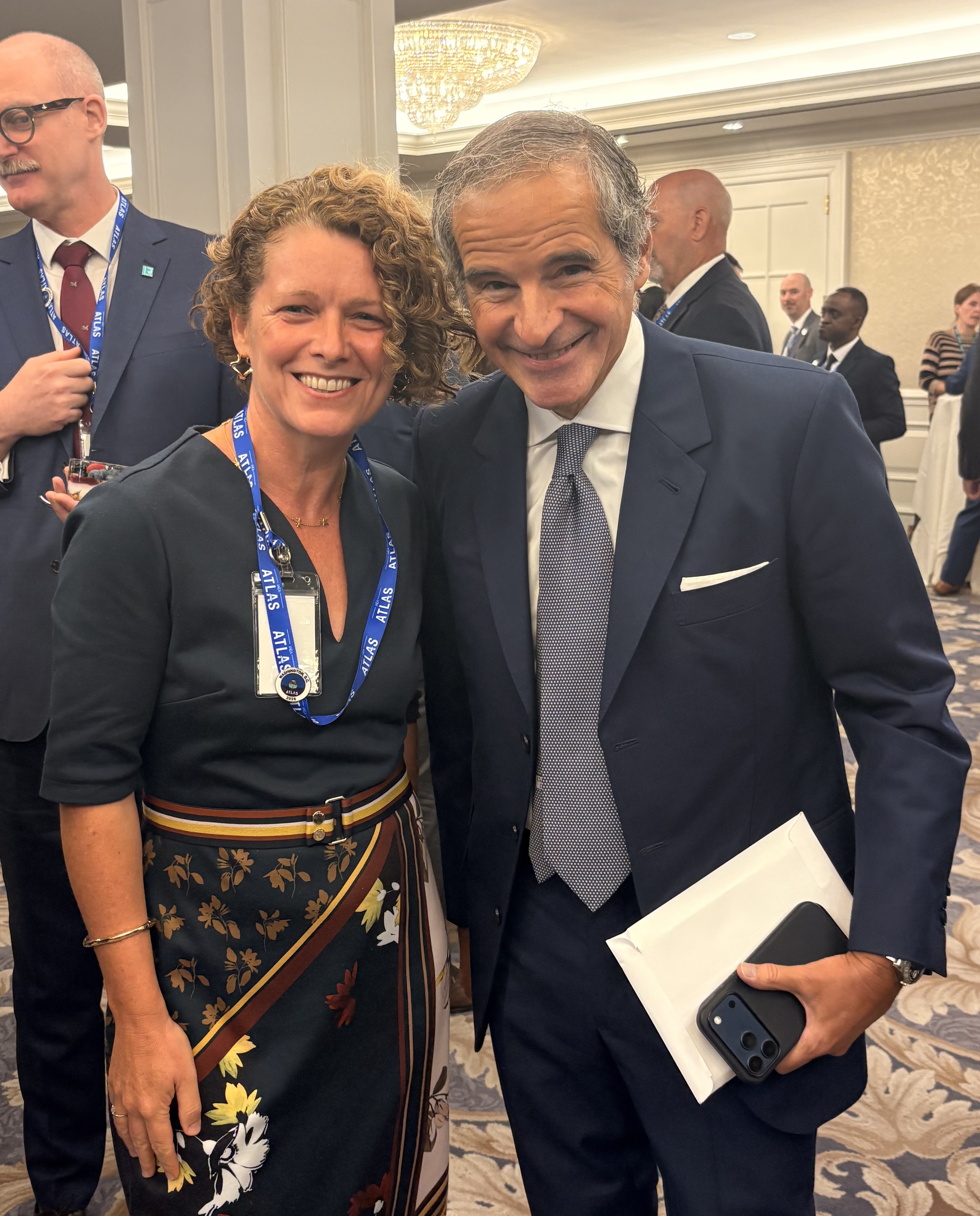
On August 26–27, 2026, the International Atomic Energy Agency (IAEA) formally launched the Atomic Technologies Licensed for Applications at Sea (ATLAS) initiative, supporting the safe, secure, and peaceful deployment of nuclear applications in the maritime domain. For years, Terra Praxis has been driving interest in mass-manufactured, emissions-free heat and power for the maritime sector—one of the hardest industries to decarbonize.
Terra Praxis: Transforming Shipping Emissions & Economics
Globally, Terra Praxis has built the case for nuclear-powered maritime by engaging nuclear regulators, classification societies, port authorities, energy majors, and major shipping companies on the technical, economic, and regulatory pathways to decarbonization at sea—connecting the stakeholders who will make nuclear-powered shipping a commercial reality this decade.
· 2020: With LucidCatalyst, Terra Praxis published “The Missing Link to a Livable Climate,” demonstrating how advanced heat sources for hydrogen production at former coastal, refinery, and shipyard sites could leverage existing manufacturing prowess, supply chains, and locations to sharply cut capital and operating costs. The report was translated into Chinese, Korean, and Japanese.
· 2023: Kirsty Gogan delivered remarks and moderated the opening session at the IAEA's first International Symposium on the Deployment of Floating Nuclear Power Plants (Vienna) and spoke at the Global Maritime Forum Annual Summit, which drew roughly 200 maritime C-suite leaders (Athens). She presented Nuclear for Maritime and Maritime for Nuclear, a major spotlight at COP28 (Dubai) (video here), where global leaders and 60+ maritime organizations committed to accelerating shipping decarbonization in line with the IMO's net-zero-by-2050 target; and also participated in International Shipping Week (London).
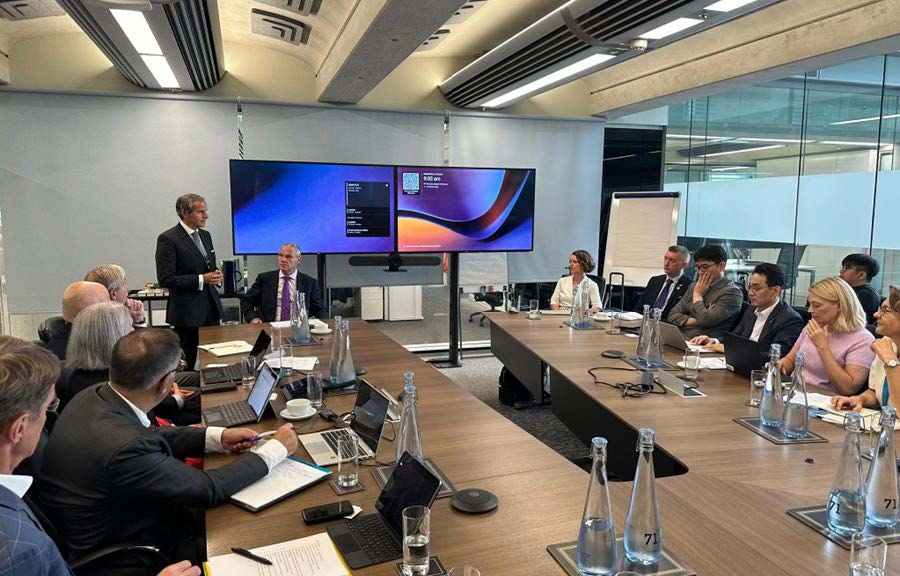
· 2024: Terra Praxis chaired the first meeting of the IAEA’s ATLAS initiative, attended by IAEA Director General Rafael Mariano Grossi (London).
· 2025: As co-host of the 5th REPOWER Retreat, Terra Praxis led a session with the Maritime & Port Authority of Singapore on digitalization and decarbonization (Singapore).
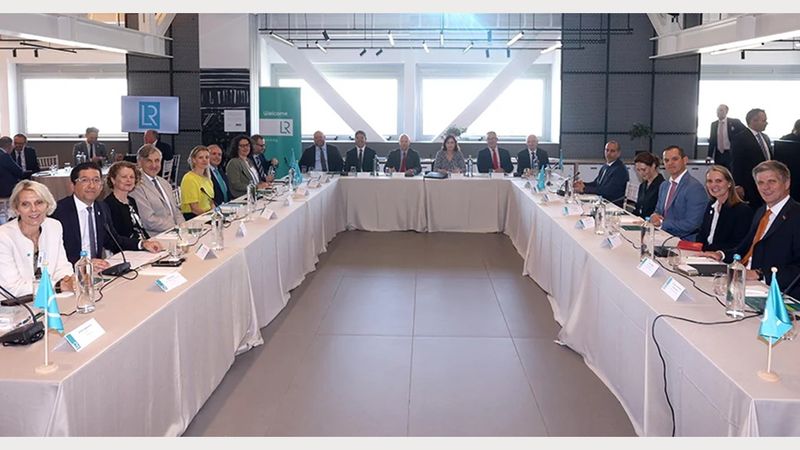
· 2026 (June): Terra Praxis participated in a closed-door session convened by Lloyd’s Register to advance practical pathways toward safe, commercially viable nuclear-powered shipping and share progress on ATLAS (Athens), as Greece and other countries weigh advanced nuclear technology for future energy and maritime transport.
The economics are compelling. Analysis with Lloyd’s Register, a REPOWER Consortium member, shows nuclear propulsion could eliminate up to $50 million in annual bunker fuel costs and $18 million in carbon penalties per vessel—unlocking $68 million in annual savings while fully eliminating GHG emissions. Beyond propulsion, SMRs at port facilities could power large-scale ammonia or methanol production, supporting the sector’s net-zero ambitions, as nuclear-maritime timelines accelerate from the 2040s to 2030.
International High-Level Forum on the ATLAS Launch
As the maritime sector advances its innovation efforts, nuclear technologies—including nuclear-powered ships and floating nuclear power plants (FNPPs)—are increasingly seen as viable solutions for high-speed transport without constant refueling, electricity generation, and coastal applications. While these technologies have existed for decades, advances in small modular reactors (SMRs) and rising demand for energy-dense solutions have increased interest in their maritime deployment. Their implementation, however, raises complex legal, regulatory, safety, security, safeguards, and liability challenges requiring coordinated international action. Through ATLAS, the IAEA and its Member States are developing a framework that supports the safe, harmonized deployment of nuclear technologies at sea.
The ATLAS Launch Event marked the initiative’s official kick-off, providing political visibility and endorsement while engaging technical stakeholders to shape its future direction. It formally introduced the ATLAS vision, structure, and initial work plan, fostering dialogue among Member States and key stakeholders on the opportunities and challenges of nuclear applications at sea. Learn more and watch video.