
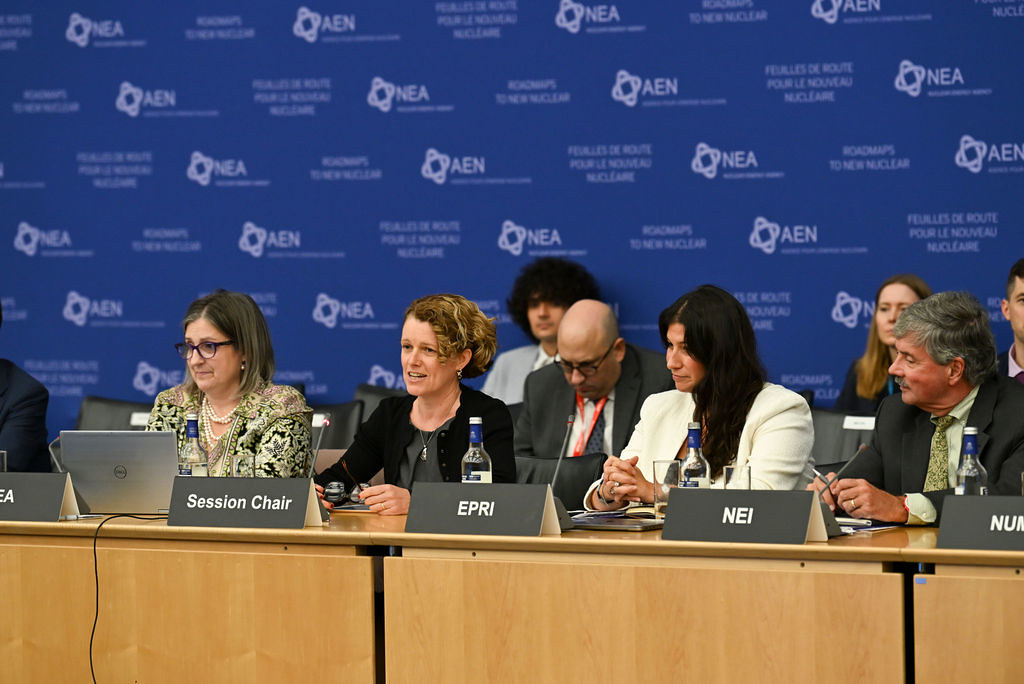
Building on the momentum of previous editions, the conference served as a platform to exchange experiences, share best practices, and strengthen international cooperation for delivering new nuclear energy projects at the scale and pace required to meet growing global energy demand. Taking place in Paris, the conference convened ministers from more than 30 countries, senior government officials, industry leaders and chief executive officers from 60 leading companies, investors, and representatives from across the nuclear sector. The event focused on addressing the challenges and identifying practical solutions for workforce development, supply chain readiness, financing, fuel supply security, regulatory preparedness, and project delivery.
Chaired by Kirsty Gogan, Morning Plenary 2—“Nuclear Energy and AI Symbiosis”—examined how nuclear-powered artificial intelligence and AI-enhanced nuclear energy systems can evolve in a mutually reinforcing dynamic. As artificial intelligence drives unprecedented growth in computing demand, nuclear energy is emerging as a critical enabler. In parallel, AI promises to accelerate licensing, facilitate construction, and improve operations of nuclear power plants. The panel—Xavier Ursat, Group Senior Executive Vice President, EDF; Adrian Anderson, Head of Global Energy, Equinix; Seung-Yeol Lim, Senior VicePresident, Overseas Business Development, KHNP; and Vladimir Troy, Vice President for AI Infrastructure, Nvidia—assessed deployment scenarios for nuclear energy and AI over the next five to ten years.
The day-one program also included welcome remarks from OECD Secretary-General Mathias Cormann and U.S. Secretary of Energy Chris Wright; a special address on nuclear energy and energy security by Denys Shmyhal, First Deputy Prime Minister and Minister of Energy of Ukraine; a fireside chat on modernizing regulatory approaches between NEA Director-General William D. Magwood, IV and Ho K. Nieh, Chairman of the U.S. Nuclear Regulatory Commission; and the Accelerating SMR Summit, with breakout sessions on SMRs for power, non-power applications, fuel recycling, and maritime applications; followed by parallel sessions on financing nuclear new build and security of nuclear fuel supply.
TERRA PRAXIS ROLE WITH THE OECD NUCLEAR ENERGY AGENCY
Kirsty Gogan chairs the OECD Nuclear Energy Agency’s Nuclear Innovation 2050 Advisory Panel (IAP)—a senior international body convening experts from government, academia, and industry to advise on accelerating nuclear innovation. Panel members include senior figures from the U.S. Department of Energy, Korea Atomic Energy Research Institute, France’s CEA, EPRI, the University of Michigan, Suncor Energy, and the Dalton Nuclear Institute, among others. The IAP provides strategic guidance on the policy, regulatory, and technology conditions needed to bring advanced nuclear energy to commercial scale—directly aligned with Terra Praxis’ mission and the five preconditions for lift-off identified in the Ten-Terawatt Initiative.
At the previous (3rd) edition of the OECD NEA Ministerial Conference (Paris, September 18 –19, 2025), Terra Praxis chaired the plenary on “The Role of Artificial Intelligence in the Future of Nuclear Energy”—bringing together senior decision-makers from over 30 countries. Panelists from Caelus, Data4, Equinix, Google, Microsoft, and Nvidia explored how AI can accelerate nuclear growth, from predictive maintenance and safety monitoring to overcoming licensing barriers. The session examined the dual opportunity at the heart of Terra Praxis’ work: nuclear energy as the ideal 24/7 baseload solution for the 140 GW of data center demand AI is expected to drive by 2030, and AI as the accelerant that can compress nuclear licensing from years to months. Microsoft outlined its dual leadership—restarting Three Mile Island to meet its own clean energy commitments while co-developing AI licensing tools with Terra Praxis. Google described the policy reforms needed to bring SMR partnerships to commercial deployment by 2030.
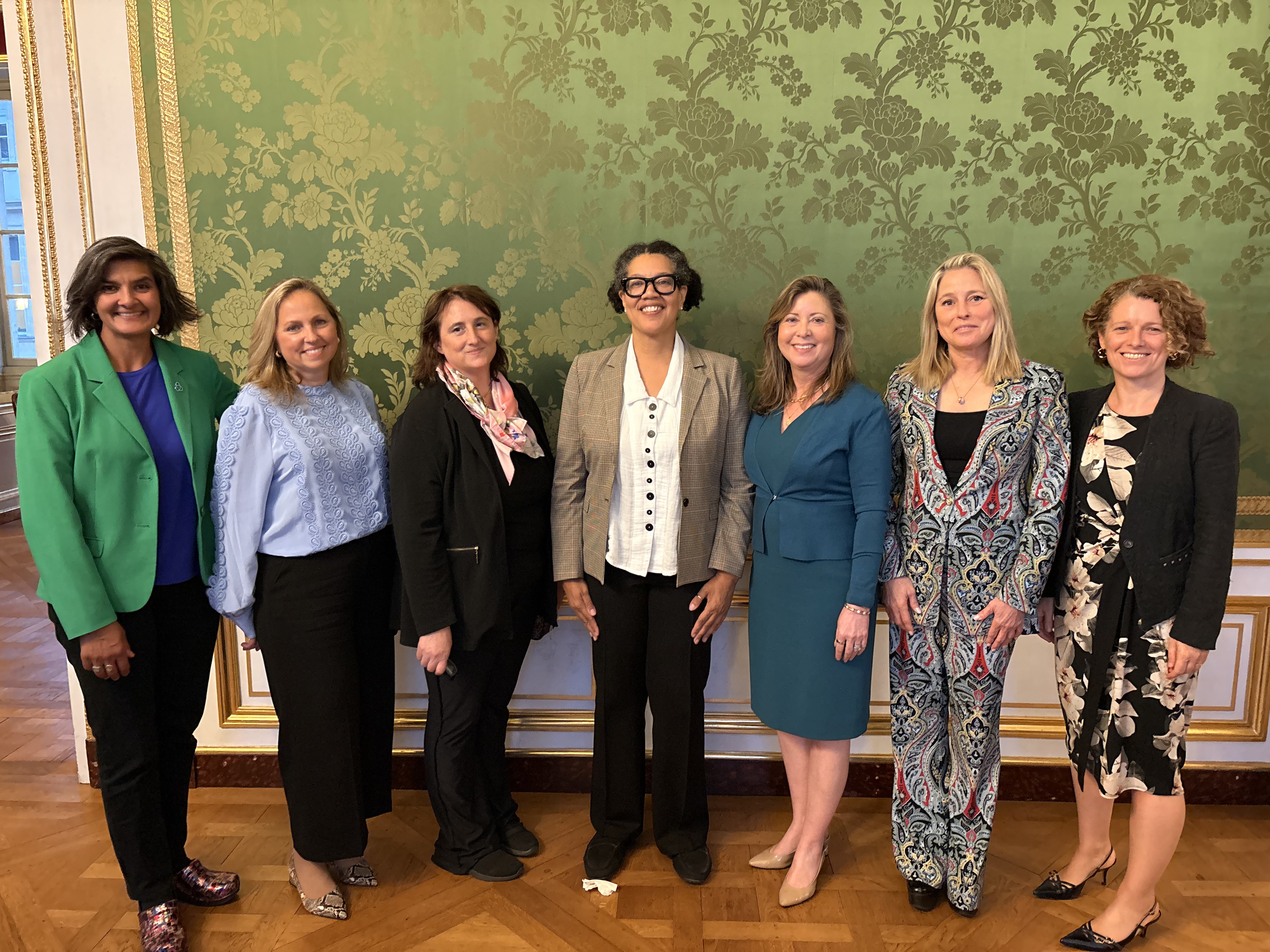
Terra Praxis also took a leading role at the OECD NEA’s first International Conference on Excellence in Nuclear Construction (London, UK, June 18–19, 2025), delivering a joint keynote with Sam Mathew (Director, UK Energy & Utilities, Microsoft) and moderating a fireside chat with nuclear regulators Stéphanie Guénot-Bresson (Commissioner, French Authority for Nuclear Safety and Radiation Protection) and Mark Foy (Chief Executive and Chief Nuclear Inspector, UK Office of Nuclear Regulation). The conference addressed critical themes at the heart of Terra Praxis’ work: fleet deployment, digitalization and AI, modular construction, and standardization for supply chain collaboration.